

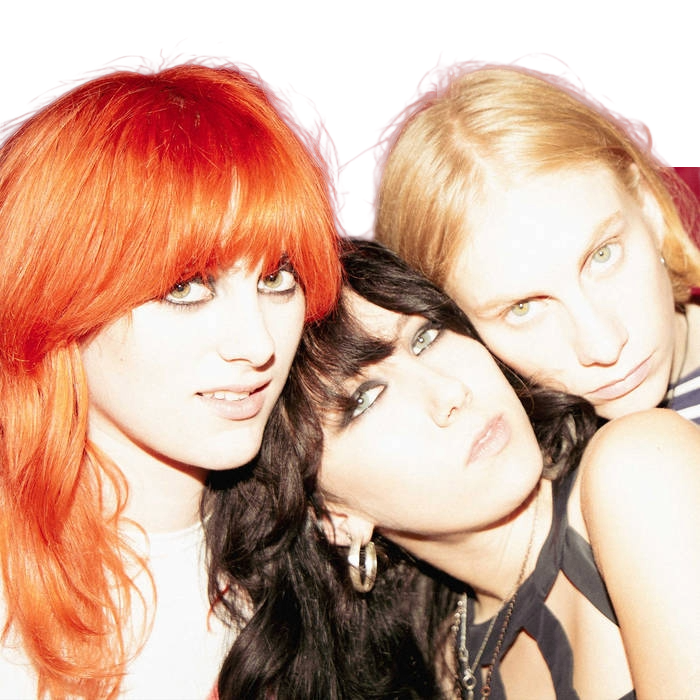
“Britain’s next great guitar band.” That’s what the NME call HotWax, and even though the fading magazine has long lost any touch with new alternative music, this Hastings trio might prove that even the dead can speak some truth. Formed by childhood friends, HotWax dropped their scuzzy debut album last year and have since supported the likes of The Strokes, The Libertines and Yeah Yeah Yeahs, captivating audiences across genres and generations. We caught up with co-founder and lead singer Tallulah Sim-Savage a week before the band embark on their biggest headline tour yet, in partnership with the Music Venue Trust, to talk about the fragile state of grassroots venues, the “uprising” of women in guitar music, and why art and visuals are so central to their work.
Next week you start your biggest headline tour across the UK and Europe. How are you feeling?
“Quite nervous, but I’m really looking forward to it. I think after Christmas and the beginning of January, when the music industry is pretty quiet, I’m definitely ready to start being around live music again. I went to a gig the other day, and it made me really excited. The last headline tour we went on, which was when the album released in March, was just so special, it was such a different feeling to doing a support tour, it’s a lot more heartwarming.”
When you’re on tour, do you get any time to explore the cities you’re in, or is it mostly just van then venue then hotel?
“We just went on the Nova Twins tour and we were sharing a bus so we’d wake up in the next city and then we didn’t have to do the soundcheck until like five, so that was so nice. It’s the first time I’ve gone on tour and actually got to know each city a bit. I doubt we’ll have time for that on this tour, though, it will just be lots of driving and setting up.”
The tour is connected with Music Venue Trust, who you’re making a series with. What made you want to get involved in that?
“Obviously in the last few years there’s been so many venues shutting down, in our hometown Hastings I think there’s only one left now. We reached out to them to see if we could do anything in conjunction with Music Venue Trust because, obviously, we wouldn’t be here without venues. It terrifies me to think about the younger generations, what are they going to do if they don’t have a space to meet other friends and be involved with the live music culture. Everyone’s just staying in their rooms on their phones, and if they’re into music, they just make bedroom music and post it on TikTok, which is great and whatever, but you need that live energy and meeting friends in real life and stuff like that.
“I’m also just excited to find out more. We’re going to be interviewing the sound man one night or the general manager another, and I’m quite intrigued because I know the venues are shutting down but I’m not, like, super knowledgeable on it, so we’ll be learning as well.”
You’ve spoken before about rising ticket prices and affordability. Have you ever felt guilty if your tickets cost more than you’d like them to, and do you ever have to make compromises where you want to keep it affordable, but that means you’re not really making any profit?
“Yeah it’s so tricky.We’re always arguing with our team because we feel so bad, but they’re like, “Well, no one is going to make any money.” That’s the hard thing with the music industry, literally everyone is struggling other than the big, big corporate companies who make this whole thing a disaster. It’s really hard, touring now is a luxury, bands are losing so much money and so many bands are unable to tour. Even big bands are finding it so hard and it’s so much pressure on everyone. It’s a nightmare.”
You and Lola have been in bands together since you were 13. How has that long history shaped the way you work together now? Does it make things easier?
“Because we’ve always written together, I can’t imagine being in a band and writing with anyone else. But also, because we’re so close and sisterly, we’re not afraid to say whatever we want around each other, so it does lead to arguments. We disagree about music, but in a way that I think is actually quite good, because we’ll end up compromising on a song. I might be really passionate about a verse melody and she won’t fully get it, and then she’ll put this guitar part over it and it becomes the best of both worlds. We work really well together, but it’s kind of funny because our dynamic is intense.”
You both grew up in Hastings. What was that like, is there much of a music scene there?
“Growing up here has been incredible, there’s so many artists and musicians and there were so many spaces for us to be playing gigs when we were underage. There’s been a really great community of people who have all sort of pulled together to record for us, make music videos, do everything, really. So we’ve been really lucky and that’s why it breaks my heart that younger generations don’t really have that. Like, we used to have venues that would do 14+ nights and that’s where we met loads of our friends and just hung out all the time. Those spaces are so important.”
Your debut album ‘Hot Shock’ was made with an all-female production team, and you’ve also got two women bands supporting you on tour. How important is it for you to elevate women in such a male-dominated industry, and how do you think the landscape is for women in music at the moment?
“Both were by accident, actually. We weren’t like, oh, we should get women, I didn’t even think about it – the supports are just our friends’ bands. But obviously it’s super important to give other women a platform, and a lot of other female fronted bands have done the same for us. It’s definitely getting easier for women but it’s still hard out there. I think we used to be quite in denial about it, or when people wanted to book us for line-ups based around women bands and stuff, we’d be like, “Oh, we just want to be a normal band. Why do you have to make it this dumb women thing?” Obviously it wasn’t dumb ,we were just stubborn and younger. But now we’re older, I think it’s really, really important. It feels like there’s such an uprising of female-fronted bands at the moment, especially in guitar music, and it feels really amazing to be a part of that.”
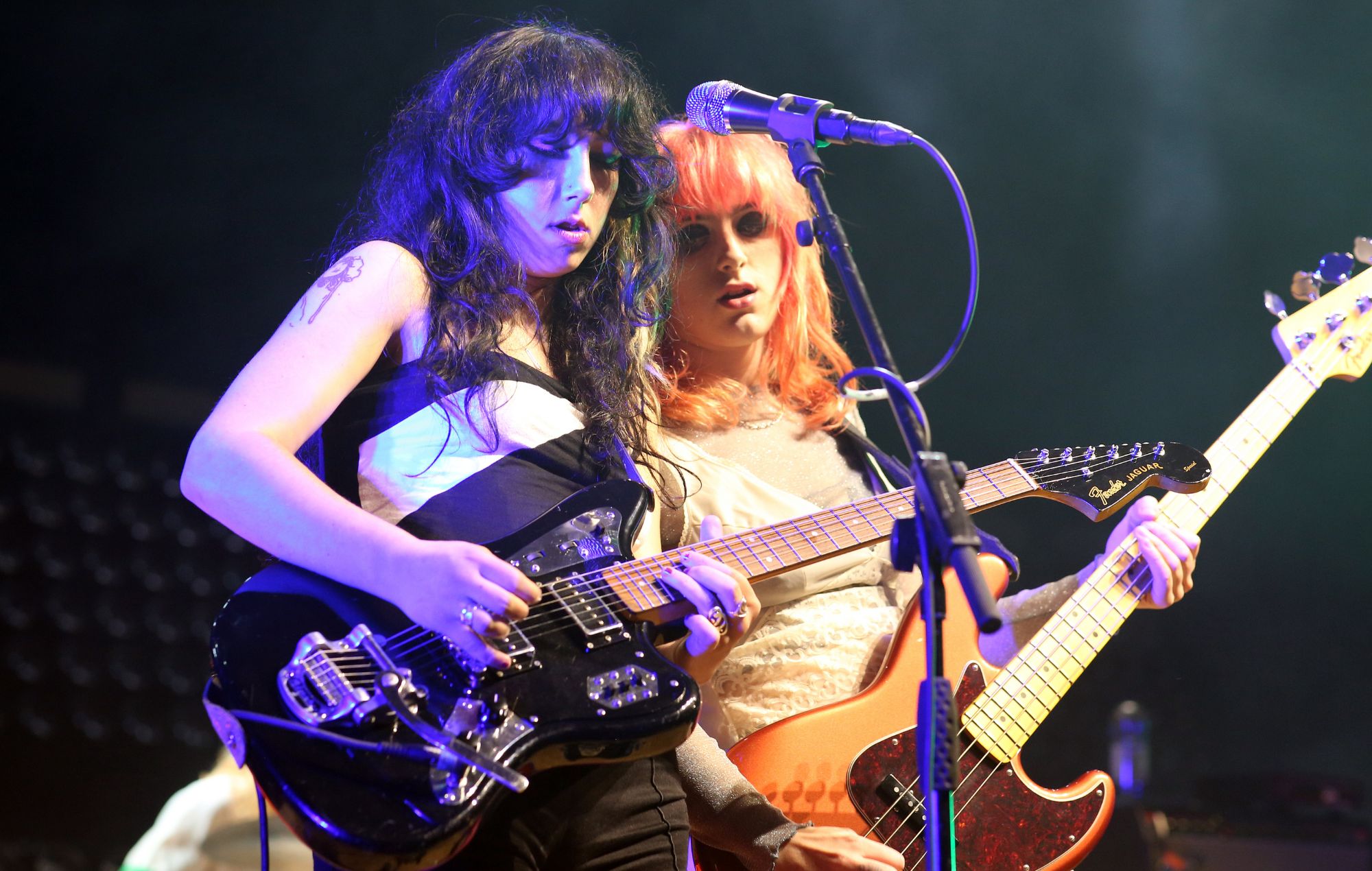
I read that you first met producer Catherine Marks after one of your shows and she said that she wanted the record to sound exactly like it did at the gig. How did you go about achieving that live sound in the studio?
She had this experiment that didn’t really work, because we got really nervous and played everything really fast. She put a PA in a room and invited all our friends down, and we sort of made a gig out of it. In the end, though, the way we did it was just to record in the room all together, only using a click if we really needed it. We recorded until a take felt really good, then overdubbed extra guitars and vocals. So yeah, it was about dialling in the sounds in the room, rather than getting the sound almost there and then finishing it in the mix. It was kind of like controlling everything while we were there, so we could really feed off that sound.
Along with the music, it feels like visuals are quite central to HotWax, and I read that one of your songs was inspired by an artist from Brighton. How important is the visual element to what you do?
Really important. I guess it’s just my thing, if I wasn’t doing music I think I’d probably want to do something in that world of video or art. It’s another way to express ourselves, and when I’m writing songs it’s very visual and emotional, and it’s really cool to collaborate with other artists. It’s fun, and I guess it’s important to have a look, a brand for the band. It’s about being who you are, and it’s a way for other people to kind of come into that circle.
The merchandise for your tour is designed by different artists, including a lyric book zine. How did you go about organising that, and what made you want to involve the DIY community element?
I think I just look up to a lot of artists online and through friends. A lot of the time I wake up at three in the morning thinking, “Oh my God, I need to message that person and see if they’d want to work together.” So I messaged all these artists I really admire, and most of them were like, “Yeah, I’d love to.” It’s just cool. Growing up in Hastings, it was mostly me and Lola a lot of the time, at school it was just us. Now we have this idea that you can reach out to people, make loads of friends, and work creatively with producers, songwriters, artists, whatever. It’s just fun. And when you’re doing the art yourself, it can be a lot – writing, recording, touring – so it’s nice to collaborate and feed off other people’s ideas.
I saw you also started a Substack for the band recently. What made you want to do that?
Yeah, I think social media is kind of overwhelming. I’ve never really found a platform that feels great to connect with fans – it always feels a bit fake. Even if you reply to comments, it’s not the same. Substack lets you really share stories and chat with people. When we went on tour with Deep Valley, Lindsay was writing one, and we subscribed for the tour and read all her stories. She’s American and says things in such an American way — it was hilarious. I guess I also like creative writing. My Substack posts do have lots of spelling and grammar mistakes, I had to put one into Word yesterday and re-upload it. But if you don’t mind bad grammar and spelling, then subscribe!
It’s just over six years since you released your first single ‘Stay Cool ‘in January 2020. How do you think HotWax has changed since then? What has the band learnt?
So much. I was 15 or 16, and I remember going to do the singing in the studio and Lola’s uncle was in the room because he’s a bass player and he was trying to get me to shout, and I couldn’t do it. I had to go into the bathroom for ages and just try and scream because I was so in myself. And to compare that to us now, it’s crazy – it feels like we’re different people.
Where do you see Hot Wax, like, five or six years in the future? What would you like to have achieved?
I’d love us to still be a band, I think we will. I’d like to have two albums out that I’m really proud of, and also just be able to make tours a sustainable thing that we can do. I don’t really see how this is going to change, but I hope it changes and I hope bands can stay alive in this scene of touring. I guess I hope I understand myself more as well and our songwriting evolves more and we just get better, really.
Words: Donovan Livesey