
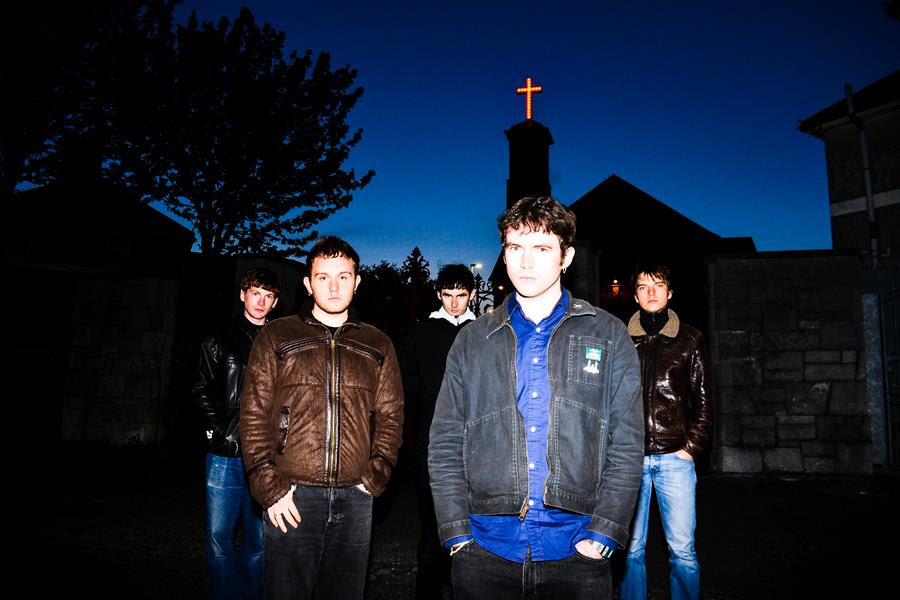
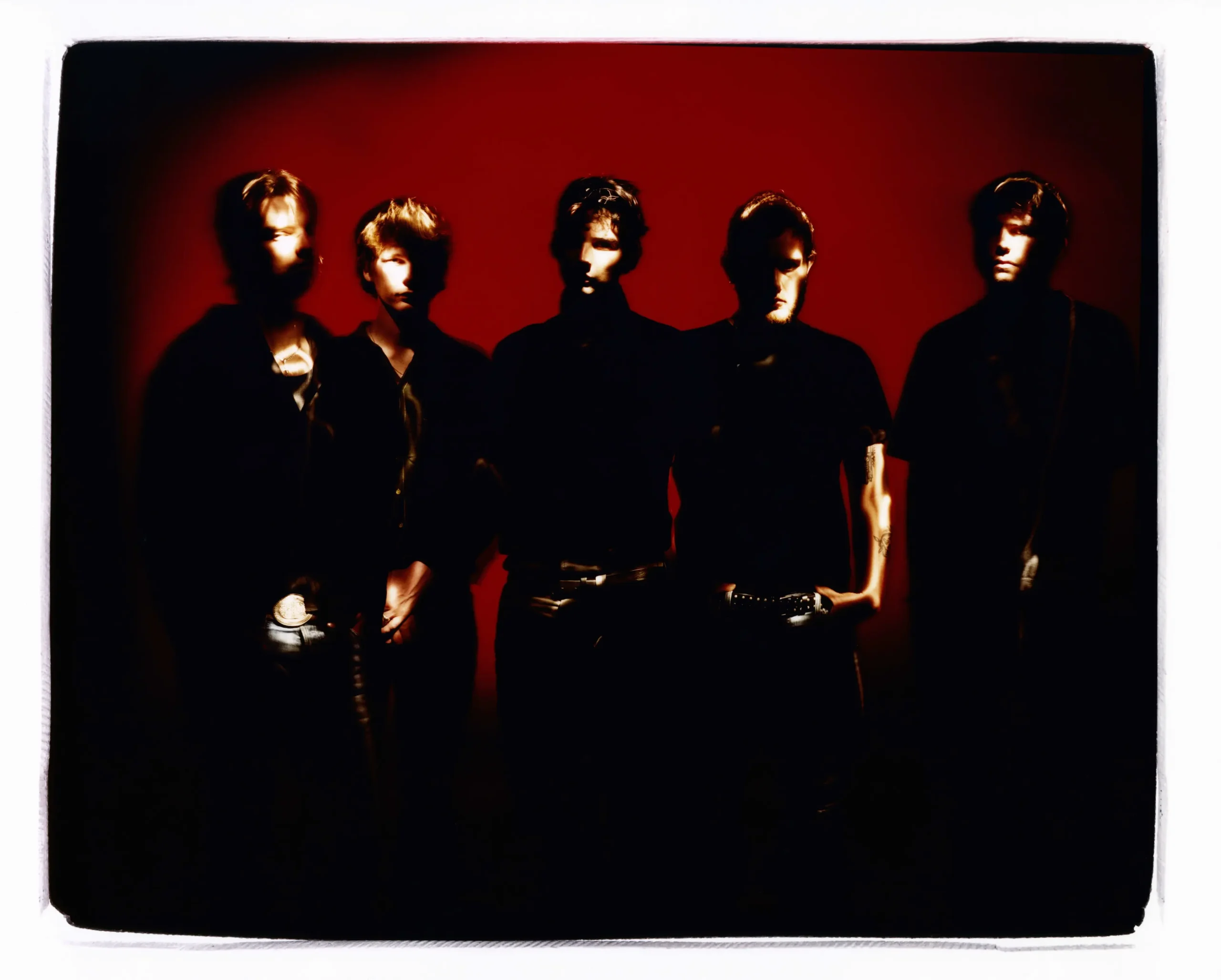
Fontaines D.C. or Wunderhorse? The music world loves a rivalry, and as guitar music’s two brightest stars released new records in quick succession, battle lines were quickly drawn, with opinion quickly polarising on social media. But what about a third option? Slap bang in the middle sits Cardinals, a young Cork five-piece melding the two acts’ distinct influences into an authentic and compelling new shape. We spoke to lead singer Euan Manning about the growing influence of art on the band’s work, taking production decisions to a psychological level, and why playing fantasy video games has made the band wary of setting bucket-list goals.
Your debut album ‘Masquerade’ is out in a couple of months. How does it feel to be so close to the release, and is that feeling changing as it gets closer?
It feels good. I’m looking forward to getting it out there, just because we’ve had it for so long. I guess maybe I’m moving away from the album a bit more as it gets closer. I can sort of feel my connection slowly starting to be severed with it – single by single and artwork by artwork it becomes public domain and belongs more to the listener than it does to me. So I’m starting to feel that disconnect a little bit more, which is strange.
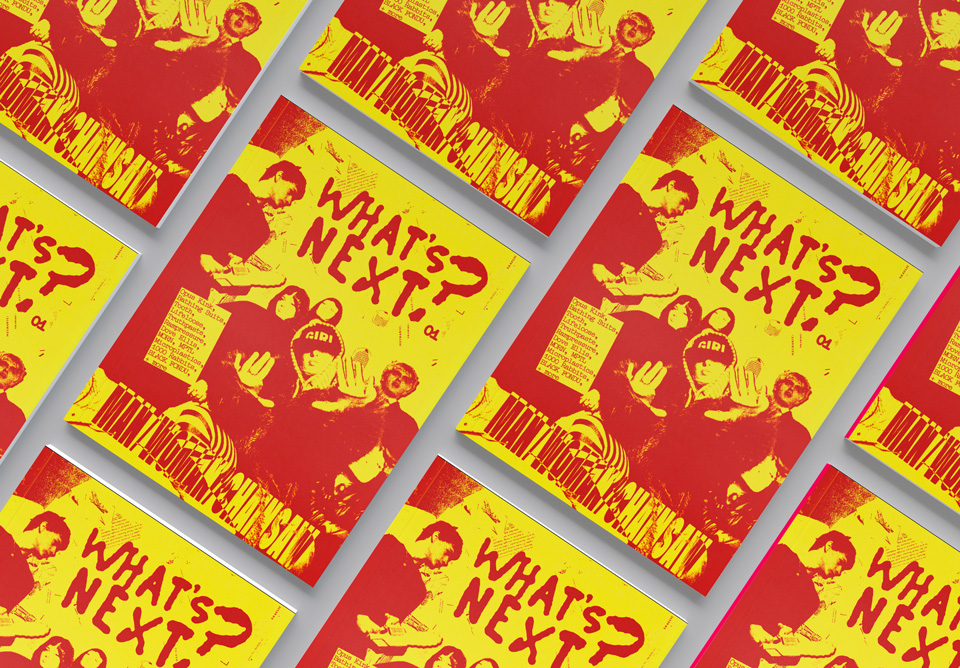
It’s being released with So Young Records. You’ve worked closely with them for a while, headlining their tour and appearing on the cover of the magazine. How did that relationship first come about, and how helpful has it been as the band has grown?
They just sent us an email. They’d had the label for a while and I think they were just looking for artists to sign. We got a manager around the same time, so everything kind of happened at once – lawyer, manager, label – which was a bit overwhelming. But yeah, they sent us an email, we talked a bit, they came to see us play a show, and then they sent us an offer to do an EP. They’ve been very helpful, as helpful as a small label can be, and they’re there when we need them. It’s been great and it’s definitely allowed us some nice opportunities.
The artwork for the album features the Fristeren painting, and you’ve referenced artist Harry Clarke as an influence. How important is art and the visual world in general to you and the band?
Very important, and it just keeps becoming more and more important for us. I think you can only be inspired by so much music, and you can only take from that as much as you can. It’s really refreshing to take from aesthetics and artists and filmmakers and stuff. It broadens your worldview and your emotional capacity, and how you take on board different feelings and emotions from things you like. It’s just been a growing influence on us as we’ve continued down this path.
The album feels like your most collaborative project yet, with all five of you working quite closely together. What was that experience like, and how do you think it impacts the record compared to the first EP?
Yeah, I guess it did feel quite different. It’s nice, I think a band should be collaborative. That’s something I enjoy: cutting something up in the room and really experimenting with it, having long conversations about why we’re making different creative choices and trying different things. I think it’s a bonding thing and a comfort thing, and eventually you get to a stage where it’s really beneficial for the group to be able to do that together. It feels like a step in the right direction, and it’s been good so far.
The album was produced by Sam Breathwick. What was he like to work with?
We just get on quite well with him, he understands our references and the stuff that we like. On a language basis it’s easy to communicate with him, especially because none of us really have a big background in sound engineering or working in studios. We’re still a bit green and learning. It was easy to talk to him and describe how we were feeling about certain decisions and where we wanted things to go or how we wanted things to sound. He was almost like a conduit for that.
While recording, you did the vocals for ‘As I Breathe’ in the stairwell of the studio. What was that like, and do you think it helped create a sense of vulnerability or authenticity?
Yeah, I think so. There are decisions you make on the surface – like wanting it to sound roomy – and then there’s the subconscious side of it. Recording there meant not only getting that real, roomy sound, but also putting yourself in a different headspace. People were coming up and down the stairwell while I was singing, and navigating that while trying to get the vocal right puts you in a really vulnerable place. It probably brought me closer to where I was when I wrote the lyrics. It’s about pushing production ideas past a physical level and into a psychological one, and how that affects the music. I just thought it was cool.
The album feels very authentic and scrappy in a good way. Were there other methods you used to achieve that?
We didn’t really work with a click track. We did most of it as a live band, so any sloppiness or speeding up and slowing down is just how we sound. We wanted it that way – natural fluctuations and whatever comes with that.
Listening through the record, there’s a clear juxtaposition between what feels like an A side and a B side. Was that made with the physical release in mind?
That’s a good question. I don’t think so, although when I envision a record I always imagine holding the physical copy. As an artist and as a fan, that’s one of the great moments you can have with an album. So it was probably there in the back of my head. But I think it mostly came from wanting to explore different emotions and areas, rather than deciding from the start that it needed to be two separate sides. It just came about naturally.
One of the heavier tracks on the B side is ‘The Burning of Cork,’ which deals with colonialism and the attack in 1920. What draws you to writing about Irish history, and is it inspired by modern parallels like Gaza?
Yeah, I’d say so. That’s on our minds a lot. It’s a big part of being Irish, and it’s a big part of the industry we’re in now. It felt like something bubbling over for us. It’s definitely the angriest and heaviest song on the record. It comes from it being right in front of us for so long and being a really difficult thing to come to terms with. You reach into your past and try to talk about a contemporary issue using what you know and what’s closest to you.
You’ve just come off a European tour and have more UK and European dates coming up. How are you finding touring at this scale?
Yeah, I like it. I think we all like it quite a lot. It is intense – there are really great highs and really low lows – but it’s been great. It was our first long stint of touring and it’s a lifestyle I think I enjoy and could get used to.
What have been some highlights from the tours so far?
Our last show of the year was in Amsterdam. We love playing in the Netherlands. It was a Saturday night, the crowd was great, people were super friendly, and the venue and staff were amazing. Everything kind of came together for a really good show. We’ve also played some of the biggest indoor venues we ever have. Touring with NewDad was fun, they’re a great gang. Going to the US, playing with The Pogues, one of our favourite bands ever, loads of stuff like that. It’s been really cool.
You mention NewDad and The Pogues, you’ve supported bands like Fontaines D.C. and Wunderhorse too. Do you approach support slots differently to headline shows?
Yeah, the set is shorter and there’s no messing around. You get on stage, do your thing, and get off. I’m still not really used to it. It’s strange stepping onto a stage that size and trying to communicate with a crowd that might mainly be there for the headline act. It’s surreal and strange. I’m not sure I like it yet, but maybe at some stage I will.
If you could pick an upcoming band to support Cardinals, who would you choose?
There’s a band from Cork called Pebbledash that we really like. We’ve played shows with them – they’re epic and really fun to be around. There’s also an Irish artist called Echo Northstar. We don’t know him that well, but we’ve played a show together, get on well, and he’s really, really talented. Those would be two we like.
It’s been two years since the release of debut single ‘Roseland’. How has the band changed in that time?
An awful lot has changed. Everything from how we write, to learning how to tour and do live shows day after day, to our relationships with each other, with management, with the label, and with listeners. It’s gone from being a side thing to a full-time thing – earning money and dealing with all that. It’s a far cry from what it was when ‘Roseland’ came out, but I have really fond memories of that time too.
Did you take any lessons from ‘Roseland’ and previous projects into making this album?
I think the big thing is being really sure of what you want and not being afraid to speak your mind. Saying, no, this is wrong – it needs to sound this way. Being present in the whole process, working hard, and dedicating your whole life to it while you’re doing it. It’s a short time, but it’s important to us.
Looking ahead, where would you like Cardinals to be in two years’ time?
Still touring, still learning. More albums. I’m excited for whatever’s next. Just to keep creating things we’re really proud of and that feel culturally significant, and to keep having new experiences without getting tired or bitter. Trying to stay in the mindset that it’s a blessing and that we’re lucky to be where we are.
Is there one main indicator of success for you – a bucket-list goal you want the band to achieve?
I think just to create. I feel like that’s such a scary thing to be like ‘this is what I want to do’, because I wouldn’t know what to do once I achieved it. I used to play fucking fantasy games like Skyrim and Oblivion and obsess over finishing a quest or getting this set of armour, then once I did, I’d get bored and never play it again. So I just feel like setting yourself limits is too, literally, limiting. But if you are going to set one, set a big one – win a Grammy, sell out a stadium, whatever it is. So I guess that.
Words: Donovan Livesey