

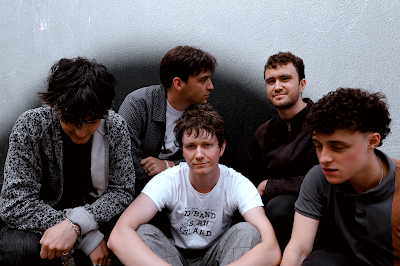
A new alternative music scene is rising in Manchester. Not Oasis Britpop wannabes, but something looser – hungrier – with a DIY spirit and sharper edge. Among the most striking of those groups are Martial Arts, a five-piece who first crossed paths in the lecture halls of the University of Manchester. But this is no polite graduate vanity project; with three singles out and a live show that refuses to sit still, Martial Arts blend jagged precision with a restless energy; post-punk might be the shorthand, but their sound defies easy categorisation – the product of a shared vision and collaborative drive. We sat down with frontman Jim Marson and guitarist-sometimes-singer Matthew Pearce to discuss supporting Bloc Party, the unusual dynamics of having three guitars, and why they’re vocal in their support for Palestine.
How did Martial Arts come about?
Jim: Well I met Rob, he’s our new bassist, on a bus after a night out. We got chatting and he told me to come down to the pub the next day to meet the others. So I did, even though I barely knew him. I already went to their old band’s gigs, and they knew I played a bit. A couple of months later, when that band was starting to fall apart, they asked if I wanted to front something new. We spent about nine months writing, then started gigging.
Was there a definitive moment when you realised Martial Arts could be more than just another side-project?
Matthew: Honestly, it was probably right from its conception. I remember writing ‘Warsaw’ – one of the first proper songs we ever did, and one we still play now. Some of the early attempts were rubbish, but that one felt different. It was the moment I thought, alright, this could actually work.
Gig-wise, playing a Speedy Wunderground showcase about two years ago was huge. All the bands there were from the Windmill scene in 2019, who we were massive fans of, so to be part of that early on was really exciting.
What’s the story behind the name Martial Arts?
Jim: We had a list of names, but none of them were any good. Then we were booking our first gig and, like most bands, it got to the point of we just fucking need a name now. And you saw it on a t-shirt.
Jim: Yeah, at Coventry away, I’m a Sunderland fan, and I saw it in the toilet at the away end. And that was that.
You supported Bloc Party a couple of weeks ago. How did that go?
Jim: It was cracking. Really nice to get on a stage of that size as well, you’re always the one behind the curtain wondering what it’s like. It sounded great, and having that much space to move around was brilliant. It was actually Rob’s first proper gig as well, he handled it like a true soldier.
Did you approach the performance differently, since it was a different stage and bill to what you’re used to?
Matthew: Not really. We practiced a lot beforehand, and we added a few new tracks, but otherwise we approached it the same way. You’ve got to go in with the same confidence you always do, or you won’t enjoy it – and I was keen to enjoy it, because that’s what all the hard work is for.
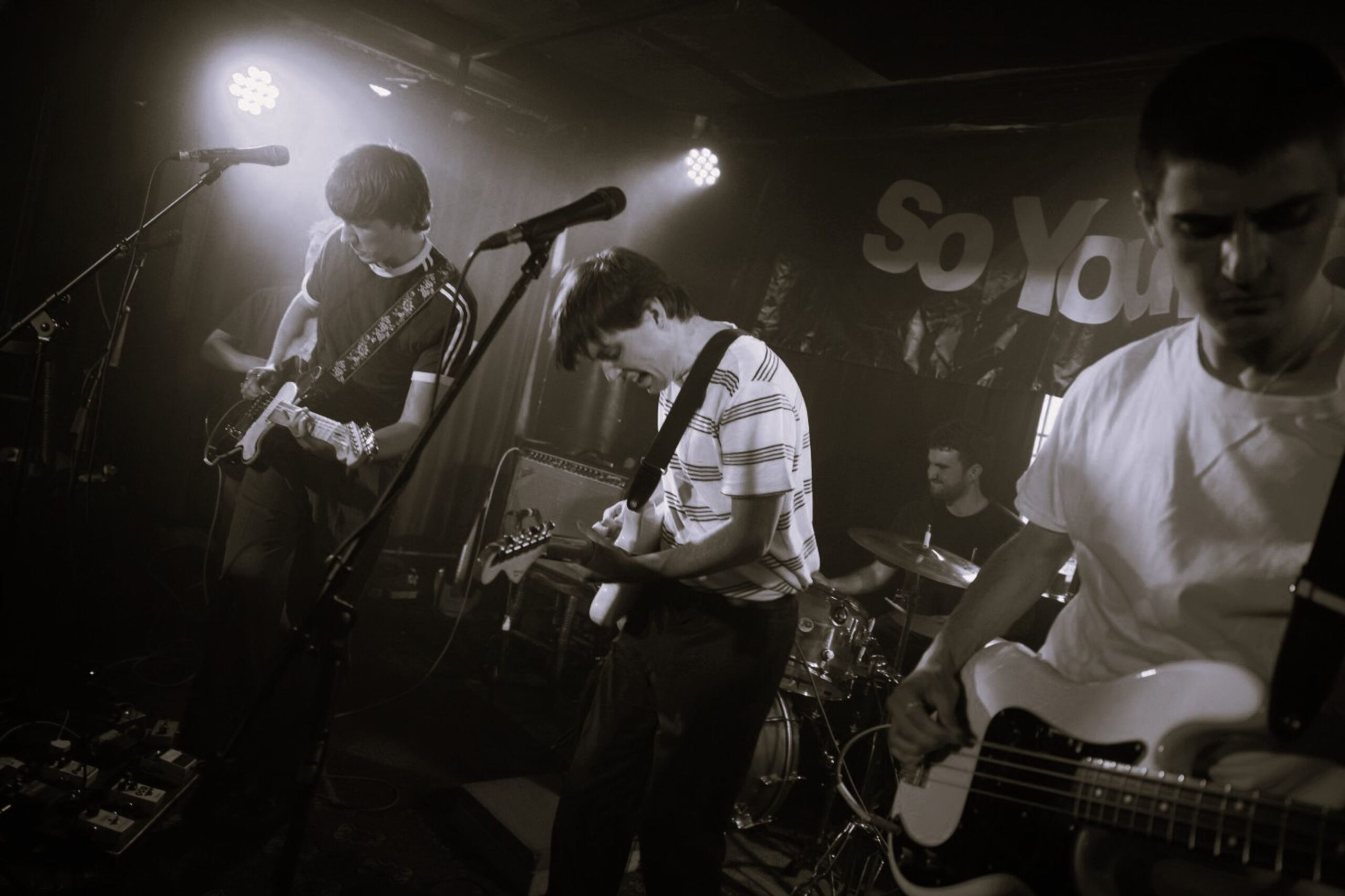
How do you approach the interplay of having three guitars in the band, without it sounding too oversaturated?
Matthew: It does sound very oversaturated.
Jim: It takes lots of tweaking and bickering. Not really bickering, more like figuring out how we want it to sit. We try to give each guitar its own space, its own pocket.
Matthew: Yeah everyone has their pocket, and we try to keep that as a rule of thumb. Sometimes we deviate, but we’ve got a bit of – not a formula – but a certain approach that everyone sticks to. And when it does work, it really works.
You guys live in Manchester – how does the city impact your sound? What’s it like there at the moment?
Jim: It’s fantastic at the moment. There are quite a few new groups, like Holly Head and Westside Cowboy, and it really feels like a fresh scene is emerging. Everyone feeds off each other’s energy, picking up influences from one another.
It’s less about the classic fucking retrospective Manchester sound and more about something new. The venues are thriving, and we’ve got loads of mates in bands, so there’s a real sense of community and shared inspiration. It’s an exciting time to be there.
You mention Westside Cowboy, who you’re in the No Band Is An Island collective with. How would you explain that to those who aren’t familiar?
Jim: It’s sort of like having a part of a scene in Manchester that is owned by the people who are in it rather than promoters and stuff like that. It’s only right that all of the gigs are sort of for profit-
Matthew: Not for profit.
Jim: Not for profit, yeah. Well-corrected! It’s more of a focus on positive action, trying to raise money and sort of educate people on what they can do, more than just reposting stuff. it’s a bit more of an active thing, and it’s also just about the fucking community of it, making people feel like there’s something happening in Manchester.
The charity for that collective is Medical Aid for Palestinians. What responsibility, if any, do you think artists have to speak out on issues like Palestine?
Jim: I guess it comes down to visibility. A lot of these issues are ignored in mainstream media and politics, so while it’s not necessarily the artist’s duty, you do have a unique power to influence and highlight things. We try to do everything we can in that regard.
Matthew: Yeah music and politics are inseparable. People engage with songs because of the political context, and some songs only exist because of the situations shaped by that context.
You’ve got three singles out at the moment. Do you have any plans to release more, or ambitions for an EP?
Jim: Yeah, we do – that’s about as much as I can say.
Matthew: Large projects, definitely, but that’s it for now.
Where do you see Martial Arts in a year, and what do you want to have achieved?
Jim: I want to be playing bigger shows across Europe.
Matthew: Meet more musicians, play some festivals next summer. As long as we’ve got forward momentum and are getting our music to more people’s ears then I’m happy.
Words: Donovan Livesey Photo: Aoife Hyland