
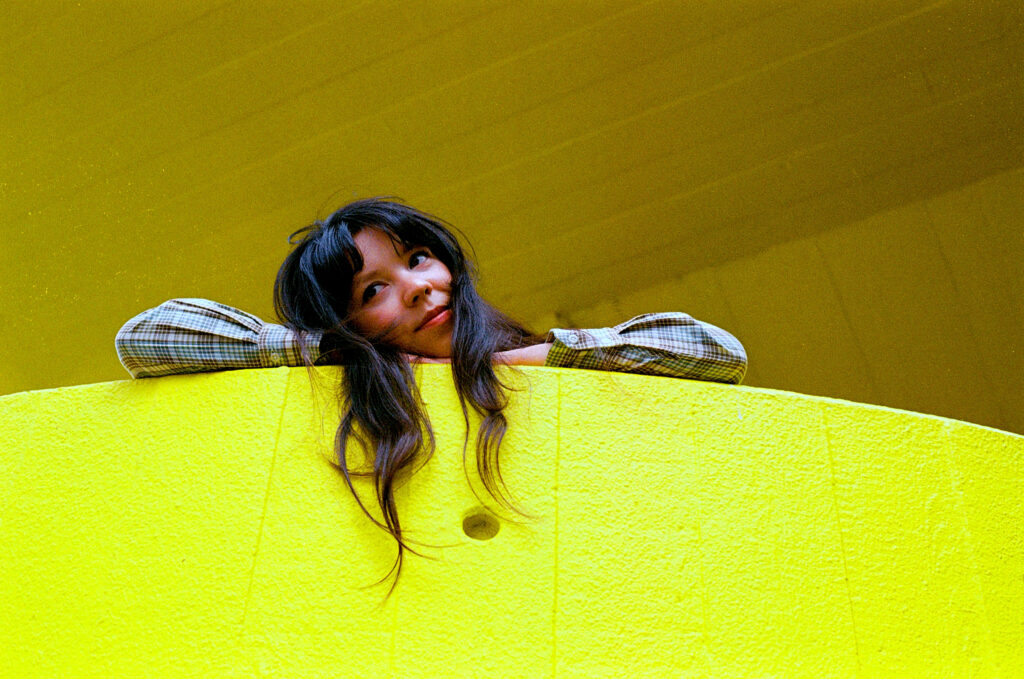
Think of any instrumentally expansive, cult-favourite act to emerge from the capital in recent years – Black Country, New Road, Geordie Greep, Jockstrap – and chances are violinist and composer Nina Lim is somewhere in the frame. A classically trained strings virtuoso, she’s become one of London’s most in-demand session musicians, and now steps out under her own moniker, Ninush, with an enchanting debut EP – the first release on The Bird Records, a new label founded by BCNR’s Charlie Wayne. We caught up with Lim to talk about everything from David Lynch to how Guildhall nearly pushed her to quit music, and what it’s like working with her “best friend” Charlie.
Your debut EP came out last month. How have you found the response, and has anything about it surprised you?
The reaction has been really nice. I feel I’ve been playing those songs since I started the project a year ago so, in some ways, nothing really changed because I felt like those songs were already out there in a way. If anything, I found the release a bit scary and weird on the day – just the idea of making it permanent and getting it out there, and having people form opinions on it felt kind of strange. Those songs especially, they were just my first songwriting experiments, so I didn’t really want to be judged from them too much.
You originally planned to release it in the summer, but it kept being pushed back. What was that delay like for you?
I really wanted to get it out in the summer. It was a bit of a compromise, but it was actually worth it in the end, because I managed to get it released with one of my best friends, Charlie, who started his own label. That turned into a really nice thing, and it’s been really helpful. At the time, it felt a bit frustrating, because I was ready to get rid of these songs.
You’ve said starting Ninush was almost an accident – you were making songs for fun, and your producer began sharing them with people. Do you think your mindset or approach was different when you were creating purely for yourself, compared to now, knowing there’s an audience? Did it feel freer at the start, or how does it differ?
I still feel that level of freedom. It hasn’t quite caught up to me that people are that engaged with it. It still feels like a random hobby that I’m doing, which is really nice. It keeps it really fun. Hopefully that feeling won’t catch up to me any time soon.
You released the EP through Charlie Wayne’s (BCNR drummer) label The Bird Records. Why did that feel like the right fit?
I think I just wanted to support something that he was doing, and then he was wanting to support something I was doing, and he helped out. He played a lot of my first shows with me, and played drums on my songs, so it just felt like a nice thing to do together. I have no idea what it means to start a label, or what a label can do at this point, but I think he’s done a lot. I don’t know what that is.
There’s a strong physical element to the release – vinyl, cassettes, even lino prints. What draws you to that side of things?
I think it’s just a really nice way of supporting musicians right now, especially the world we’re living in is just very fast-paced, and streaming has made it really difficult for people, so I fully support physical copies. I think fans love having a thing that they can collect as a part. I think it’s a nice thing.
The EP also has a distinct visual identity. How important is that alongside the music?
I have quite strong ideas of what the project should be visually, and I think with this first project, there was a lot of learning involved in how it works. I don’t know if I fully executed what I was trying to do, but it was mainly a mash-up of favours from friends. It’s definitely an important element. I think the music is quite visual storytelling to me.
Beyond music, what other influences feed into your work?
I guess linked to my project, I love stuff that’s surreal, like I love films that have a surreal element but also have humour in them as well. When I was a kid, I loved Tim Burton, and now maybe David Lynch. Just things that have some kind of sense of irony in them, and playfulness. I’m trying to think of what else. I think a lot of my music so far has been quite nostalgic, or has been about inner child stuff, so a lot of the stuff I imagine visually is quite playful.
You’ve spoken about struggling with performance anxiety during your time at Guildhall. How did that period affect your relationship with music?
I don’t think I ever quite reached the point of quitting it altogether, but I definitely reached as close as you could get to that. And then I managed to get a load of CBT for free through my uni, and that was kind of helpful. And then I started imagining what my life would be without music – I think I just put a lot of pressure on the classical violin thing to work out, and I don’t come from a musical family, and it all just seemed really impossible.
There’s so many people who are trying to do it, and there’s not that much work anymore. I mean, there’s still a lot of work in London, but in comparison to 10, 20 years ago, it seems really changed. I couldn’t really understand how my career would look and how I’d be able to make a living out of it, and I think that was giving me a lot of stress.
Looking back, did that experience shape you in any positive way?
Definitely a lot of lessons, for sure. I think leaving Conservatoire completely took me out of that bubble, and I’ve felt so much better since leaving. I think it was just the environment of it, and music schools are still quite old-fashioned to a certain extent in terms of how they educate people, and the real world is just nothing like that. I think I can still have a career in classical music, and I can still do other things. It doesn’t have to be as black and white as they made you believe it would be.
You’ve described the grassroots scene as healing post-Guildhall. What did it give you that you were missing before?
I think growing up just only doing classical music, it’s just a very different performing environment. You’d be playing venues to a majority older audience who are just sat down in silence, observing every detail. And then getting to play in the grassroots scene and play with bands, it’s just a polar opposite thing, where you’re playing to people who are there wanting to have a good time, and wanting to root for you. It’s just more of a relaxed setting.
You’ve got festival dates coming up at Great Escape and elsewhere, do you approach those differently to headline shows?
No, I wouldn’t say I approach my shows that differently. I guess for my headline I had a bigger band than usual, so I probably won’t be able to do that for festivals. But I think my shows are pretty consistent – I haven’t really done that many festivals so I’ll have to see.
Great Escape is all about new acts, are there any emerging artists you’re excited about right now?
I’m a big fan of Stanley Welch, he supported me for my headline. He’s got an amazing EP out and I feel like it’s barely gotten any attention, so there’s that. I’m sure there’s others, I just don’t actually get out to gigs that often.
How has it felt stepping into a front-and-centre solo role?
I thought it was going to be a lot scarier than it actually was, and then when I did it, I kind of felt exactly the same. I know it’s technically more pressure, and I know because it’s a solo project, it’s kind of about me, but it hasn’t felt like that when I’m on stage. Maybe that’s just my way of coping.
You’ve worked with a lot of pop artists like Holly Humberstone and Anne-Marie, but also alternative acts like Black Country, New Road and Geordie Greep – how do those two worlds shape your own sound? Do those influences come together when you’re writing your own material, or do they stay quite separate?
The pop work has only been string arranging, so you’re kind of just trying to do a service to the song that you’re working on. So even though it’s creative, it’s still kind of limited in that sense. I think working with the bands, like Geordie Greep, is just very different. They view songwriting completely differently, with a lot more freedom – I haven’t yet learned how to do that, but it’s definitely really inspiring.
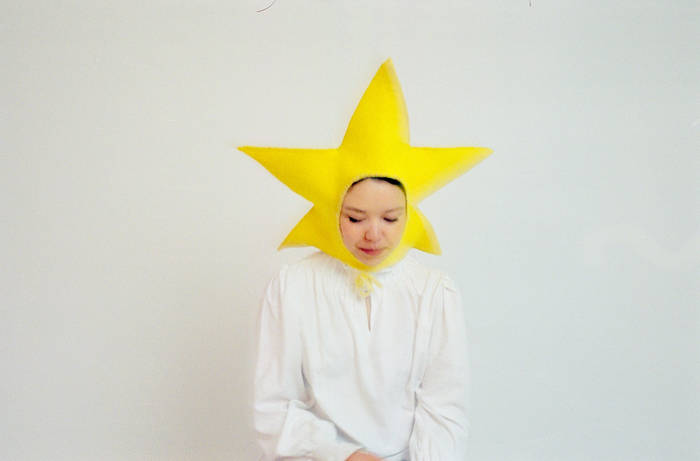
It’s been a year since your first single Stardoll was released and you had your first headline at the Windmill. What’s changed for you in that time?
I think my songwriting has developed quite a lot since I first started writing. The first few songs on that EP, I kind of just wrote on a whim, and I didn’t really think through them structurally or think about the lyrics that much. Whereas I think now I’m putting a bit more effort into making sure I feel really good about them before they’re done. So yeah, there’s definitely been some development there. And yeah, I guess learning how to be your own artist has been a pretty huge thing. I didn’t really understand the world of that at all, and now I’ve got a bit of a grasp on it. But it’s definitely been very collaborative, I’ve had a crazy amount of help from so many people so I wouldn’t have been able to do it by myself at all.
You’ve mentioned wanting to make an album. Has that process begun yet?
I like the idea of having an album done. I think we’re on the fence about EP or album – I was like, I want to do an album, and then everyone else was like, maybe not. I think it’s like an industry thing. I don’t know. I think if I do happen to have an album ready by the end of this year, then I’d quite like to do that, but we’ll have to see.
What direction is the new music heading in? Is it mostly a continuation of the EP, or something different?
The new stuff is quite different. I think there’s some songs that feel like a continuation and some that don’t. I’m trying not to think about that too much because I think it’s still early days for me and songwriting and I don’t really want to box myself in a genre or a sonic world just yet. But there’s quite a few more acoustic songs, I’d say, with less electronic elements. And maybe a bit more 70s inspired. Difficult to explain.
Will you approach the next project differently based on what you learned from the first EP?
Yeah, 100%. I think I didn’t really have much confidence in my own decision making during the whole process of that first EP, and there were a few times where I thought I should just let someone else, like a professional, do it for me instead. And then it didn’t quite sit right, so I feel like with this project, I want to have a bit more creative control so that I can stay true to my vision a bit more.
Do you have any long-term ambitions as a solo artist?
I don’t really like having bucket list goals because I don’t like setting myself up with disappointment really. I guess a really big one would be it would be nice to go to Glastonbury for free. Yeah, I guess the biggest dream would be to have a career out of this and be able to live off being an artist. I think that feels like the biggest one at the moment.
Words by Donovan Livesey